BLOG Perfomax
Latest Post
---------------
New SEO Tricks in 2025: What's Working Now & How to Stay Ahead
2025-10-23Introduction
SEO isn't what it used to be. Google's algorithms have shifted, and generative AI is reshaping how people search; search engines are also becoming smarter about user behavior. If you're still relying only on old tricks, you're going to fall behind. In this article, we'll explore fresh, tested SEO tactics for 2025. You will discover what's trending, what's effective, and what to avoid so you can adapt your strategy and get real results.
1. Optimize for “Answer Engines” and AI-driven Search (AEO / GEO)
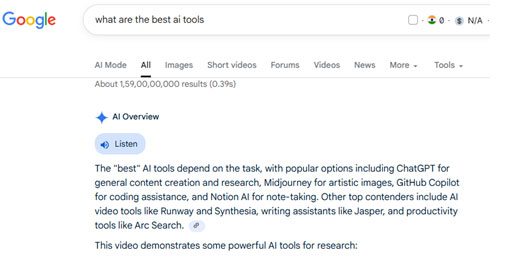
- With tools like ChatGPT, Gemini, Google AI Studio, Copilot, and Perplexity, many users now receive answers directly — not via click-through to websites.
- This has given rise to Answer Engine Optimization (AEO) or Generative Engine Optimization (GEO). The idea: shape content so that AI systems can digest it, summarize it, and cite it.
What to do:
- Use clear, concise answers; structure content with FAQ-style, Q&A, headings/subheadings.
- Mark up content with structured data/schema so AI tools can understand content context.
- Update content to reflect the latest info since AI engines tend to favor fresher, accurate content.
2. Build Topic Clusters & Topical Authority
- Rather than straight keywords and random content, search engines now prioritize topic authority.
- Your site should cover related subtopics deeply, interlinked, forming a content ecosystem.
- You’ll get more “signals” (internal links, semantic relevance, user satisfaction) this way.
Actionable tips:
- Identify pillar topics in your niche.
- Create sub-pages/posts on related subtopics.
- Interlink heavily.
- Search for entities and topics related to your service and add them to your website subpages.
- Keep updating the cluster: add new insights, address user questions, and deepen content.
3. Embrace Multimedia + Visual / Video Search
- Video, images, and infographics are not just “extras” - they can make or break engagement, dwell time, and shareability. Search engines are indexing more video content and short-form content.
- Visual search (Google Lens, Pinterest Lens, etc.) and short-video formats (Reels, Shorts) are also increasingly part of the SERP ecosystem.
How to optimize:
- Produce video content; optimize titles, thumbnails, transcripts, and chapters/timestamps.
- Compress and optimize images; descriptive alt text, captions.
- Use schema markup for images/videos.
4. Zero-Click and Featured Snippet Optimization
- More searches end without any click to a website (zero-click): featured snippets, knowledge panels, and AI Overviews.
- While fewer clicks may sound bad, being featured (even in a snippet) boosts authority, visibility.
Tips:
- Structure content to answer clearly in 40-60 words for snippet eligibility. Use bullet / numbered lists and tables.
- Target "how to", "vs", or question-based queries.
- Format headings clearly (H2, H3…) so Google can extract the relevant text.
5. Improve User Experience & Core Web Vitals
-
Google continues increasing the weight of user experience: page speed, mobile-friendliness, interactivity, and visual stability. Core Web Vitals are essential.
Mobile-first indexing is no longer optional.
- Reduce page load time: optimize images, minify CSS/JS, use caching, and CDNs.
- Reduce layout shifts.
- Make sure your mobile layout is fully usable: no cut-off buttons, readable text without zooming, and easy navigation.
- Test with Google's tools: PageSpeed Insights, Mobile Friendly Test.
- Old content that was once good may have drifted: facts outdated, links broken, new developments not included. Refreshing helps.
- Republishing helps signal to search engines that the content is still relevant.
- Perform content audit: find posts that had traffic but are declining.
- Update stats, examples, and add new sections or FAQs.
- Improve or add multimedia.
- Adjust meta tags, rewrite intros if needed.
- Google emphasizes E-E-A-T (Experience, Expertise, Authoritativeness, Trustworthiness) more than ever. Content needs to come from credible sources, show real experience, and include references.
- Relevance to user intent: whether someone is looking for information, making a purchase, or comparing options. Align content accordingly.
- Include author bios, credentials.
- Cite reliable sources.
- Show real examples, case studies.
- Avoid thin content and fluff.
- Use structured data/schema to help search engines understand content type.
- Ensure that sitemaps are up to date.
- Fix broken links, redirect chains.
- Use canonical tags correctly.
- Use server-side rendering or pre-rendering if needed, especially for dynamic content.
- Voice searches are more conversational, often phrased as questions. Need to adapt content.
- Multimodal search (images + voice, image + text) is growing. Being able to respond to queries via image or mixed media helps.
- Use long-tail, question-style keywords.
- Integrate visual assets and captions.
- Offer concise answers for voice assistants.
- Google rolls out updates often. Some are small, some big. Keeping an eye on them helps you spot issues early.
- Analytics tools, Google Search Console, and performance tracking are essential.
- When an update happens, audit pages that dropped significantly. See what they have in common.
- Check whether your competitors content changed: content length, formats, and freshness.
- Adapt: could be multimedia inclusion, restructuring content, tweaking metadata.
- User-centric- answering intent, offering great UX, fast & mobile-friendly.
- Credible & authoritative — showing E-E-A-T, using real data and sources.
- Adaptable — updating old content, embracing new formats like AI responses, video, and voice.
- Technically sound — structured data, clean tech architecture, fast load times, accessible.
What to focus on:
6. Regularly Refresh & Republish Evergreen Content
How to do it:
7. Strengthen Relevance, E-E-A-T & Trust
Tactics:
8. Technical SEO & Crawl-Ability
It's not sexy, but technical foundations still matter so that content can be seen and understood by search engines.
Key technical upgrades:
9. Voice, Multimodal & Conversational Search
What to do:
10. Monitor & Adapt to Algorithm Updates Proactively
Actions:
Conclusion
SEO in 2025 rewards websites that are:
If you integrate these newer/updated tricks into your SEO strategy, you’ll be in a much better position to rank, especially as Google and AI systems continue evolving.
Whether you need a complete SEO overhaul or fine-tuning your on-page and content strategy, we’ll make sure your website ranks where it deserves to be at the top.